

Canada Post Strike 2025: How CRA and Service Canada Are Responding
December 5, 2025
The Tax Court Case That Redefines Support Payments
December 19, 2025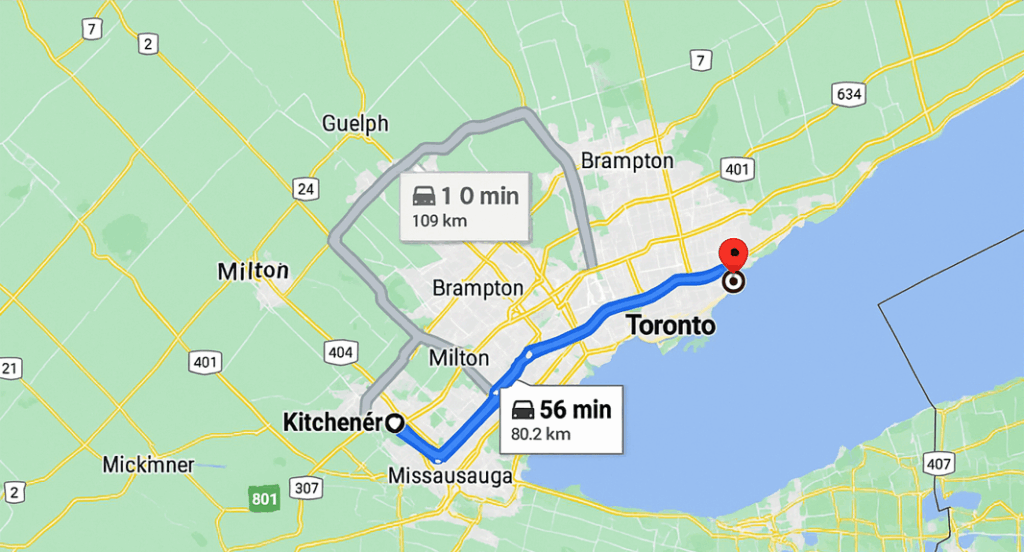
On August 25, 2025, the Tax Court of Canada delivered a significant decision on the deductibility of moving expenses under the Income Tax Act. The case revolved around whether a taxpayer’s 2020 relocation met the statutory requirement: the new residence must reduce the commuting distance to the new work location by at least 40 kilometres.
The Canada Revenue Agency (CRA) calculated the difference as only 32.8 km, relying on an “eastern route” suggested by Google Maps. The taxpayer, however, presented data showing an average difference of 47.4 km using a “western route.” Both parties used Google Maps, but their results varied due to different route parameters and timing.
The Court emphasized that the correct measure should be based on the shortest normal route, a principle supported by prior case law. Importantly, it acknowledged that modern tools like Google Maps represent the new norm for determining such distances. This recognition signals a shift toward integrating technology into tax compliance and dispute resolution.
A critical factor was timing: CRA’s calculation reflected traffic conditions at 7:45 pm, while the taxpayer demonstrated that at 4:45 pm—his actual commuting time—Google Maps consistently suggested the longer route. By analyzing weekday traffic patterns, the taxpayer proved that the average distance saved exceeded 40 km.
The Court concluded that properly deployed computer algorithms provide reliable, consistent data for evaluating relocation eligibility. This decision underscores two key points: accuracy in using technology matters, and taxpayers should document real-world conditions when claiming deductions.
For professionals and taxpayers alike, this case highlights the growing importance of digital tools in tax law interpretation. Leveraging technology effectively can make the difference between a denied claim and a successful one.


